Written by Dr. Leo Maren · Co-founder of Fwocus · Behavioural scientist · PhD, Imperial College London
Presentations fail in the first third
Watch any overlong presentation and you will see the same shape. The speaker spends seventy percent of the time on the first third of the slides, then sprints through the conclusions that actually mattered. The audience remembers the rush, not the content.
The cause is structural. Openings get rehearsed the most, so they feel comfortable, and comfort expands to fill the available minutes. A countdown does nothing to prevent this; it only announces the damage at the end. A stopwatch with section laps catches it in rehearsal, where it can be fixed.
I sat through a colleague's job talk that spent twenty-five minutes on background and four on results. The hiring committee's questions were all about the results he had rushed. The slides were excellent. The budgeting was not.
Budget time per section before you rehearse
Before the timer starts, assign minutes to sections on paper. A thirty-minute talk might get four minutes for context, eight for method, twelve for results, and six for conclusions and questions. The numbers are a plan, not a prediction.
This step feels unnecessary and it is the most important one. Without a budget, every section feels equally important in the moment, and the early ones win by default. With a budget, you have a standard to rehearse against instead of a vague sense of pace.
Weight the budget toward the end. Audiences forgive a brisk opening; they do not forgive a rushed conclusion. When I plan a talk, the results section gets the largest share and the background gets the smallest I can defend. If the background needs more, it becomes an appendix slide, not a longer section.
Lap every section during rehearsal
Run the talk at full voice with the stopwatch running and press L at each section boundary. Compare the laps to the budget. The first run will show overruns; that is the point of the exercise.
Fix overruns by cutting slides, not by talking faster. A section that runs double its budget has too much content, full stop. I remove one slide per overrun minute as a working rule. It sounds brutal and it works: the audience never misses the slide you cut, but it always feels the minute you stole.
Rehearse until the laps land within ten percent of the budget three times running. At that point the timing is in your body, not just on the page. You will still drift on the day, everyone does, but the drift starts from a calibrated baseline instead of a guess.
Plan the cut, not the rush
Every presentation needs a contingency for running behind. Decide in advance which slides are expendable and mark them. When the timer shows you behind at the halfway point, you skip marked slides calmly instead of accelerating through everything frantically.
The mechanism is worth understanding. Speaking faster degrades comprehension nonlinearly: a ten percent speedup costs little, but the twenty-five percent speedup of a panicking speaker collapses retention. Cutting one section preserves the pace of everything that remains. The audience experiences a shorter talk, not a worse one.
Practice the cut once. Run the talk, skip the marked slides at the halfway lap, and land the close. Knowing you have done it removes the fear that makes speakers rush. The contingency you have rehearsed is the contingency you will actually use.
Shortcuts and the section-budget ritual
Space starts and pauses, L laps each section, R resets between run-throughs. F opens a fullscreen timer you can see from the back of the room. Rehearse standing, with the slides advancing, exactly as you will present.
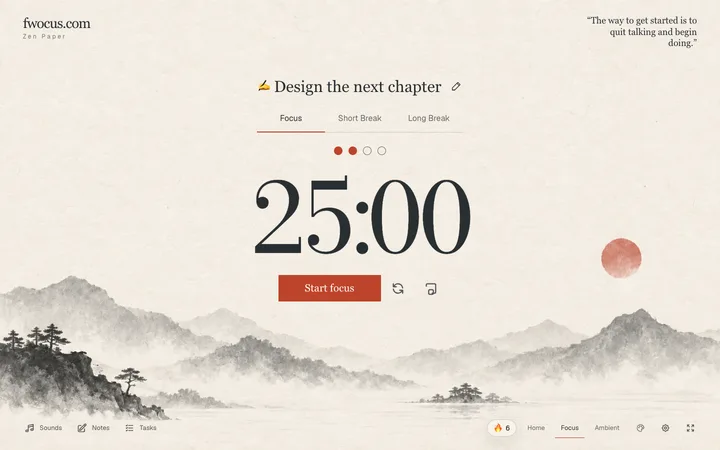
My ritual: budget on paper first, then three lapped run-throughs against the budget, then one practiced cut. The Zen Paper theme keeps the display readable at a glance without pulling focus from the slides. Total preparation time is under two hours for a thirty-minute talk, and it shows.
For team rehearsals where several people present sections, the Fwocus app can run structured timing alongside these open sessions. The principle stays the same: the timer budgets the sections, and the speaker owns the pace.
FAQ
How should I divide time across presentation sections?
Weight the budget toward the end: keep background brief, give the largest share to results and conclusions. Write the minute budget on paper before rehearsing. Then lap each section and cut slides, never speed up, until laps land within ten percent of budget.
Why do I always run out of time in the last third of my talk?
Openings get rehearsed most, so they feel comfortable, and comfort expands to fill the minutes. Lap each section in rehearsal and you will see the front-loading clearly. Fix it by cutting opening slides, not by rushing the ending.
What do I do if I fall behind during the actual presentation?
Skip your pre-marked expendable slides and keep a calm pace. Decide which slides are cuttable before the talk and rehearse the shortened version once. A shorter talk at full pace always beats a full talk delivered in a rush.
How many rehearsals does a presentation need?
Three full lapped run-throughs against your section budget, plus one rehearsal of the contingency cut. Fewer leaves the timing uncalibrated; many more risks sounding memorized rather than prepared.